
“An Australian Shepherd needs work.”
It is probably one of the most repeated sentences about this breed. And one of the easiest to misunderstand.
Someone hears the word “work” and immediately pictures a flock of sheep, an agility field or at the very least a fifteen-kilometre run. If we have neither sheep nor a field, we start to feel we are somehow short-changing our dog.
So a plan is born: a morning run, a ball after work, obedience in the evening, a hike at the weekend. The Aussie is still restless? Then clearly there is not enough work yet.
A few months later the owner is exhausted. The dog is in fantastic shape and ready for more.
What “work” actually meant
This is where it helps to return to the word itself.
Working dogs were not created to burn as many calories as pointlessly as possible. Their value lay in being able to notice, think, respond to a situation and work together with a person.
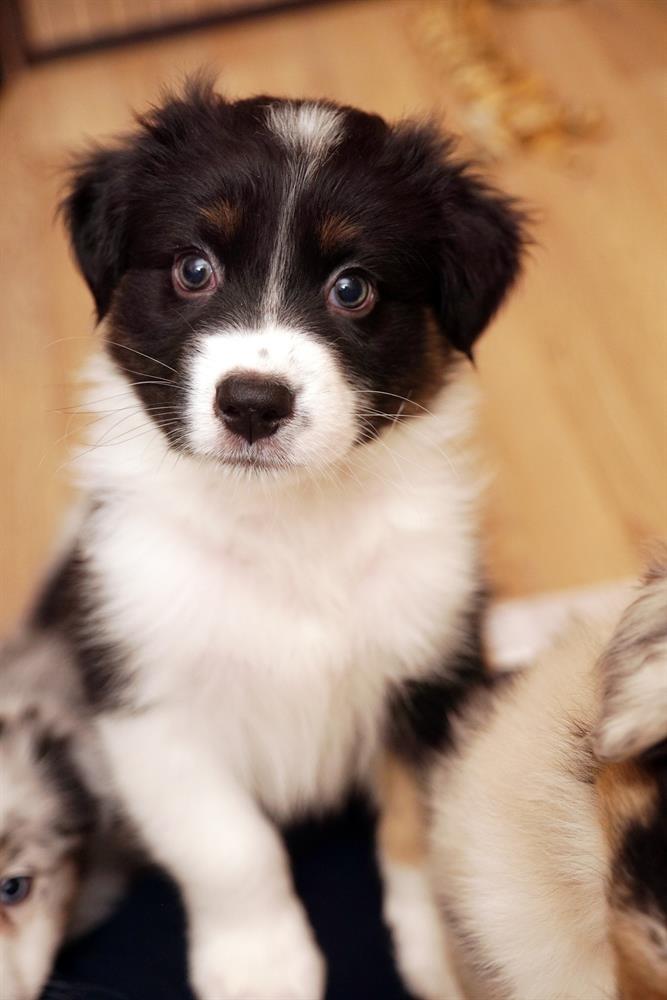
So for us “work” for an Aussie means meaningful participation rather than exhaustion.
Sometimes it really will be herding. That is the work the breed was historically used for, and it can be extraordinarily interesting for the right dog and the right person.
But life in twenty-first-century Vilnius offers other jobs too.
Scent work in the woods. A rally or obedience session. Agility. Mantrailing. Learning to travel calmly on public transport. Searching for a toy at home. Five minutes of a new trick. A trip to a new place where the dog has to listen to you and process the environment at the same time.
Even an ordinary walk can be meaningful if it is not simply collecting kilometres. Letting the dog sniff, choose a direction in a safe place, inviting him into something together now and then, exploring a new route — all of this can give his mind more than thirty minutes of mechanical ball throwing.
Everyday jobs are jobs too
There are very ordinary “jobs” too.
An Aussie can learn to lie calmly while you drink coffee at an outdoor café. To wait while a child puts on their shoes. To go to his place when the doorbell rings. To fetch a toy, find a particular object or help with small household tasks.
Does that sound less heroic than herding sheep? Perhaps.
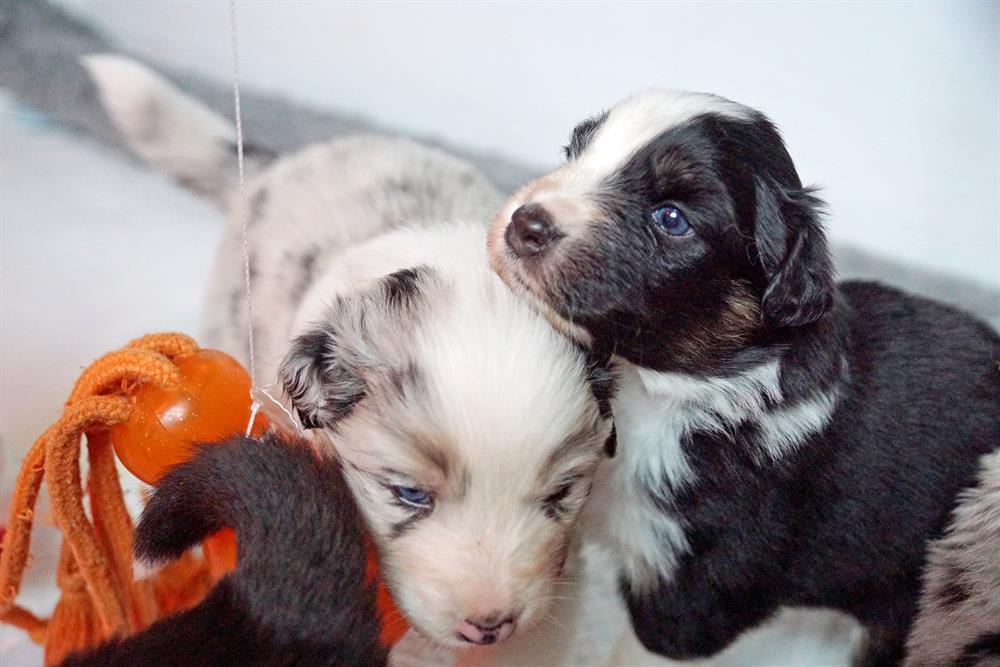
Not necessarily to the dog.
For a clever dog it matters enormously to feel that his behaviour means something and that people communicate with him clearly.
Doing nothing is work too
But there is one activity Aussie owners sometimes forget to include on the “work” list: doing nothing.
Yes, it sounds like cheating.
But a dog who only knows how to switch on is not well prepared for family life. He needs to be able to switch off as well. To come home after training and sleep. To see that you have sat down at the computer and not invent an urgent project for himself. To accept a day when illness, work or simply life means nobody is organising adventures.
Rest is not a lack of activity. It is a skill we develop as well.
That is exactly why the sentence “I’ll wear him out properly” worries us a little. A dog is not a battery to be run down to zero every evening.
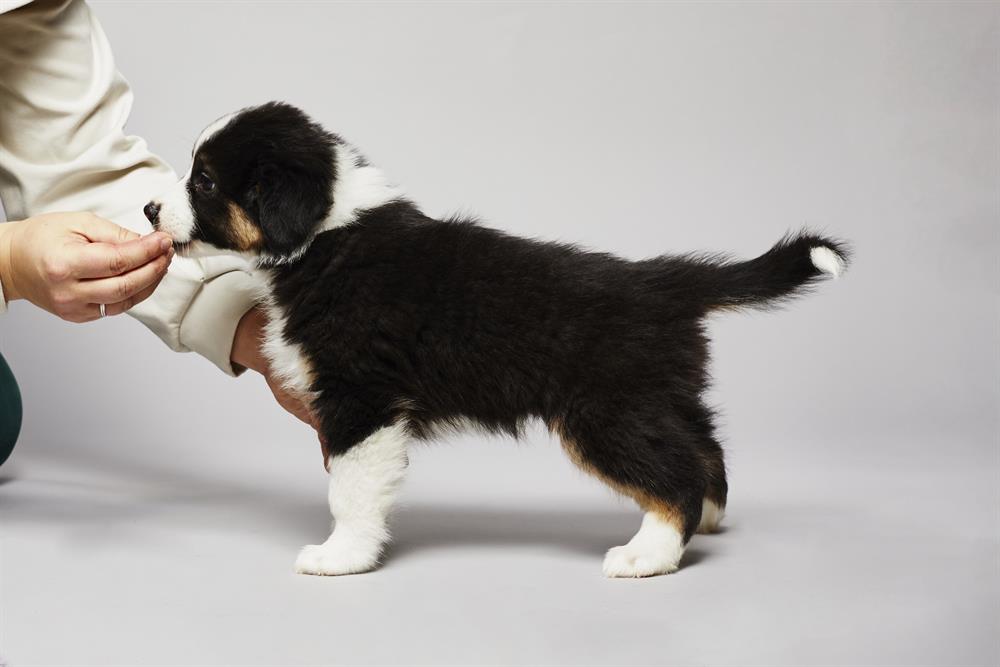
If the only way to reach peace every day is to exhaust the dog completely, the system is very fragile. One week of illness on your part is enough to reveal that you live with an athlete nobody has told what to do with himself.
A better goal is a dog whose life has several layers: physical movement, thinking, scent work, learning, a relationship with his person, new experiences and rest.
How much of each is needed will depend on the individual dog. For one Aussie sport will be the favourite part of life. Another will delight in work with his nose. A third will be happiest travelling a great deal with the family. A fourth will need far more peace than you imagined when you saw the breed advertised.
And that is not disappointment in the breed. That is getting to know one dog.
So if you are considering an Aussie and asking yourself “what job will I give him?”, do not rush to fill a seven-day sports calendar.
Think about whether you want a dog with whom you will enjoy learning, walking, exploring and solving small everyday tasks. Whether your life has room for doing things together. And whether you will have the patience to teach him that sometimes the biggest task of the day is lying quietly beside you.
An Aussie really does need work.
It is simply that, very often, his best work is being a full participant in your life rather than a professional exhaustion project.
Invitation: If you are considering an Aussie, let us talk not about how many kilometres you run, but about your real week and what place a dog should have in it.
Source: The FCI and ASCA breed standards - the Australian Shepherd is described as a working, intelligent, versatile and human-oriented breed.