
If you ask online whether an Australian Shepherd suits a first-time owner, the answers usually split into two camps.
Some will say: “Of course, if you love him and give him time, everything will be fine.” Others, roughly: “Absolutely not. First raise three other dogs, get a master’s degree, and then come back.”
As so often with dogs, the truth is far less convenient, because it does not fit into one sentence.
Yes, an Australian Shepherd can be someone’s first dog of their own. In our questionnaire 58 of 117 people were in exactly that position. That fact alone makes them neither better nor worse candidates.
A far more important question is not “which dog is this for you?”, but “how do you learn when you do not know something?”
Two beginners, entirely different levels of readiness
Imagine two people. The first grew up with family dogs. They walked them, played with them, sometimes fed them. But the decisions were made by their parents: they chose the vet, dealt with behaviour problems, planned holidays, paid the bills and got up at night when a dog was unwell.
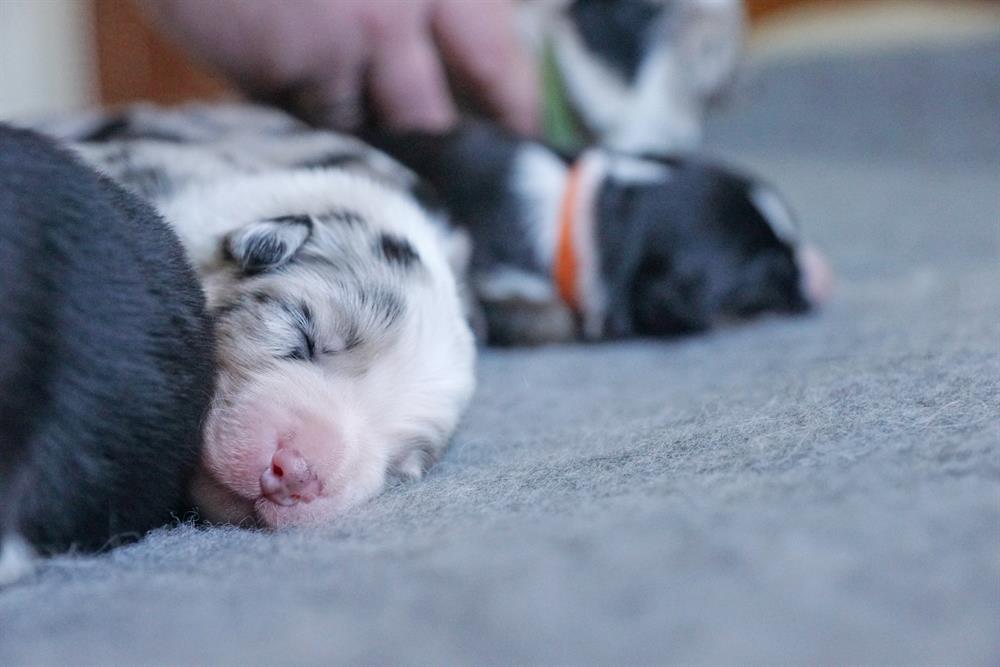
The second person has never had a dog of their own. But they know how to find reliable information, take feedback, plan, keep agreements and, most importantly, say “I don’t know this”.
Formally both are beginners. In practice their readiness can be completely different.
Experience helps, but only when it has taught you to watch the individual dog. It starts to get in the way when it turns into “we have always done it this way”. Aussies show very quickly that an old answer does not always suit a new dog.
These are clever, observant, often sensitive dogs who differ greatly from one another. One will shrug off a failure and try again, another will shut down quickly under pressure. One will be very people-oriented, another more independent. One will take city noise as background, another will need considerably more help.
So for a first-time owner the hardest thing is often not learning the cue “sit”. Technical information is easy to find today. It is harder to work out whom to believe, to notice when a method does not suit a particular dog, and not to panic when something that worked yesterday suddenly does not work today.
Method tourism
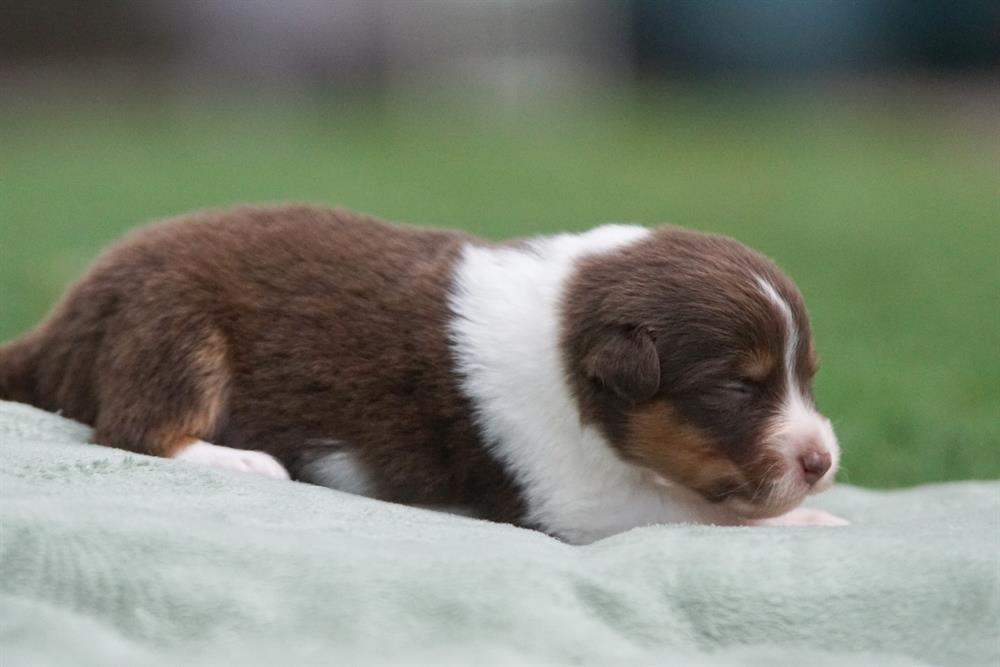
With a first dog there is another very human temptation: to become a perfect owner straight away.
You read a book. Then three more. You follow five trainers. One says feed only from the hand, another says never. One urges lots of socialisation, another warns against too much. After a week you have more methods than the puppy has life experience.
And so method tourism begins: on Monday we do it one way, on Wednesday we see something on TikTok and change everything, on Friday a friend says a different approach worked for his dog.
For an Aussie, clarity usually helps more than a collection of methods.
So if this is your first dog, it is well worth having people whose judgement you trust lined up in advance: a breeder who knows their lines and how the breed behaves, an ethical trainer, and a vet for health matters. Not so that they make every decision for you. So that at a critical moment you do not have to search for the answer among two hundred comments online.
What photographs almost never show
A first dog also means a first encounter with things that almost never appear in photographs. With biting. Sleepless nights. Urine on the floor. Adolescence. The first real fright. The first vet visit that costs considerably more than you planned. With the moment when you sincerely think: “Are we doing any of this right?”

People raising their fifth dog will have the same thought. They will simply recognise sooner that it is normal.
So a first dog is not a red flag for us. A red flag would be someone choosing their first dog believing that love alone will solve every practical question, or that an active breed will finally force them to start living a completely different life.
An Aussie is not a motivational app with fur. If you do not enjoy walking today, it is very risky to expect that a puppy will suddenly make you love rain, darkness and the November wind.
But if your life already has room for a dog, you are ready to learn, you are not afraid to adjust your plans and you have someone to lean on, a first dog can absolutely be an Aussie.
He will not necessarily be the easiest first teacher.
But a good pupil does not really need the easiest teacher.
Invitation: If an Aussie would be your first dog, do not hide it in the questionnaire. For us that is not a red flag but an important place to start the conversation, letting us match both the right puppy and the right amount of support.