
“And how many hours a day will he need?”
We hear this question constantly and we completely understand why people ask it.
Numbers are reassuring.
It would be very convenient to answer “two hours”. Forty-five minutes in the morning, an hour in the evening, a little more play and that is that — the Aussie’s battery is flat, the daily quota met.
Sadly, a dog is not a Garmin activity ring.
The same single hour can mean entirely different things. An hour walking slowly through the woods and sniffing is not the same as an hour chasing a ball intensively. A walk in a quiet place is not the same as one in the city centre among cars, people and dogs.
The clock will say 60 minutes in both cases. The dog’s mind will not.
How to accidentally raise an athlete with no OFF switch
An Australian Shepherd is certainly not a breed for whom a walk around the house and a day decorating the sofa will do. This is an athletic dog of working origin, and usually a very curious one.
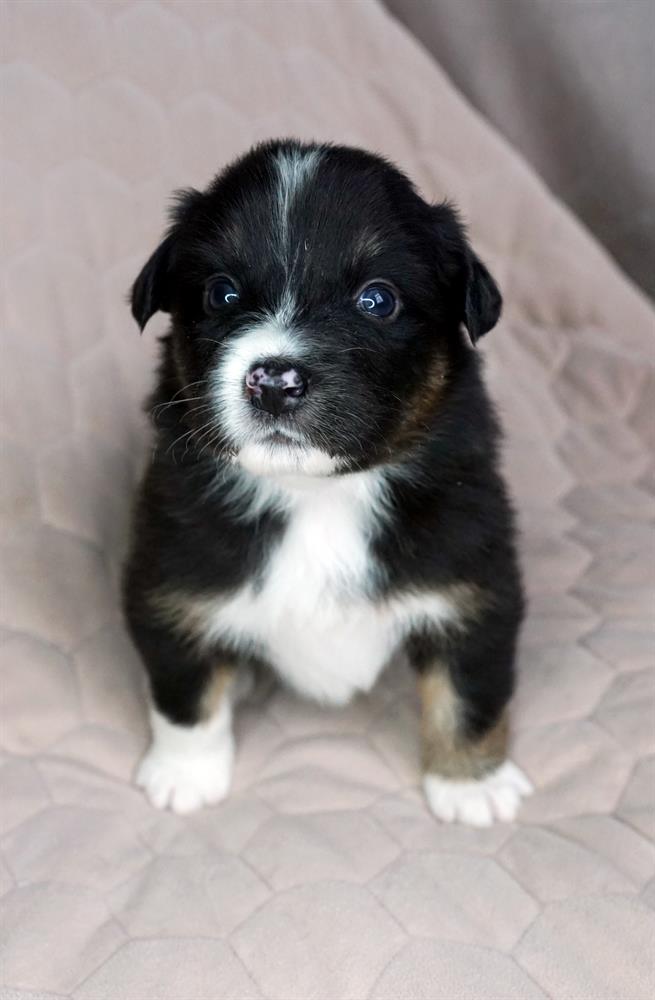
But that is exactly why we sometimes fall into the opposite extreme.
The Aussie is restless? He needs to be worn out more. Still restless? Clearly yesterday was not enough. An even longer walk, more ball, more running.
And for a while it even works.
Only one very logical process is happening alongside: the dog is getting physically fitter.
Yesterday he needed five kilometres. A few months later five kilometres are a warm-up.
Congratulations — we have raised an athlete. We just never found the OFF switch.
Rest is a skill too
So when we talk about activity for Aussies, we always include something that sounds far less impressive: rest.
A dog has to know more than how to switch on. It has to know how to stop.
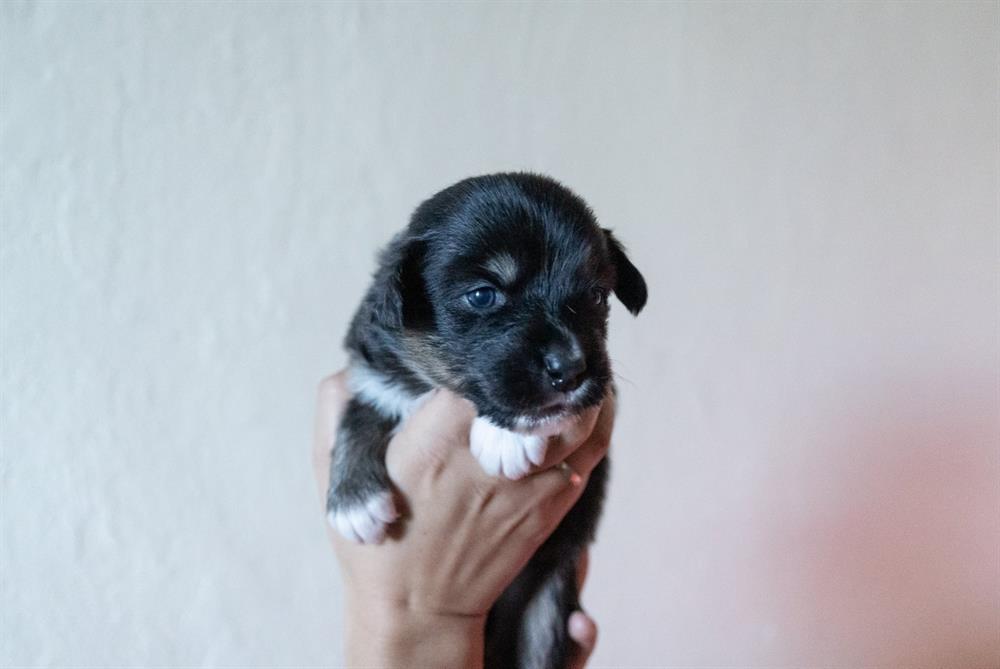
A good walk is not simply one after which the dog is physically tired. What interests us is what happens once you get home. Can he lie down and rest? Or does he walk from room to room for another two hours looking for the next project?
The same applies to mental work. Puzzles, training, scent tasks and working with a person are excellent things, but you can pile on so much of them that the dog’s nervous system simply cannot switch over any more.
This is especially worth remembering with puppies.
An overtired little one will not necessarily lie down neatly and announce: “Thank you, I have had enough impressions today.” More often he will start racing about, biting, barking, no longer hearing you, and looking as though he has twice as much energy.
And it is very easy to think: so he needs to be worn out even more.
Sometimes the opposite is needed.
There is no single perfect routine
How much activity a particular dog needs will change throughout his life. A puppy is still growing. An adolescent looks capable of anything one day and is worn out by far less the next. An adult dog has different stamina. A senior’s need for activity does not disappear, but its form changes.
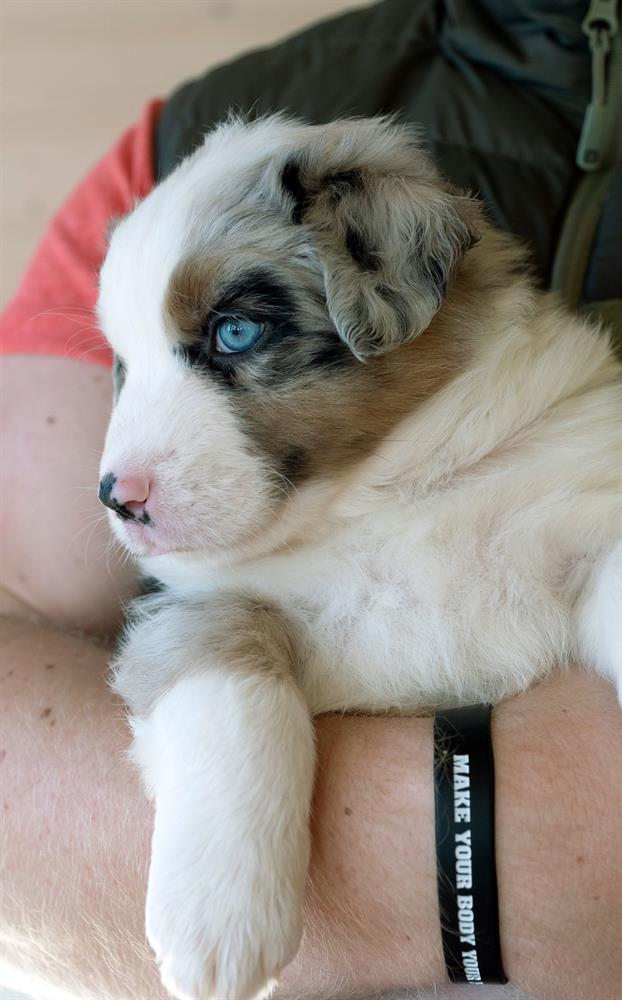
So there is no single perfect routine.
In our survey, 65 of 117 future owners wrote that they planned to give the dog 3–5 hours a day, 39 said 1–2 hours, and 11 said more than five.
Numbers like these are useful to know, but for us they start a conversation, not a verdict.
Because a far more important question is: what does your week look like?
Does that life include woods, learning, shared time and new experiences? Are there quiet evenings too? Will the dog have to sleep while you work? Will the plan hold even in a bad week?
An Aussie does not need an owner who wins the most-active-person-in-Lithuania contest every day.
He needs a meaningful and sustainable life.
Sometimes it will hold a long hike. Sometimes a training session. Sometimes twenty minutes of slow sniffing. And sometimes a rainy Tuesday when everyone would simply like to stay quietly at home.
And a dog living well should be able to be your partner in all four of those scenarios.
Invitation: In a conversation about a future puppy we are not expecting a list of sporting results. We want to understand the rhythm of your week and to work out together which profile of energy and sensitivity would be sustainable within it.