
When someone fills in our questionnaire, we are not looking for right answers.
There is no secret algorithm in which “I live in a house + I run three times a week + I had a dog as a child” automatically turns into a green tick beside “suitable for an Australian Shepherd”. If such an algorithm existed, our job would be considerably simpler.
Having read through 117 detailed questionnaires from future owners, we saw something far more interesting. People interested in Australian Shepherds are usually a good deal better prepared than the stereotypes sometimes suggest. But it is also very clear which areas we think about far less before a puppy arrives.
For example, 50 people had been thinking about a dog for more than a few years, and another 36 for more than a year. So almost three quarters of them certainly did not come up with the idea last Friday after seeing a pretty blue merle puppy on Instagram.
That is good news. But here comes a “but”.
You can dream about a dog for five years and still mostly think about weekends. About the woods, travelling, morning coffee on a terrace and a beautiful dog beside you. We are far more interested in Wednesday. That entirely un-Instagrammable Wednesday when a meeting overran, it is raining, a child is ill, you are exhausted, and the Aussie could not care less that your calendar has decided to collapse today.
Who will look after the dog then? How long will he usually be alone? What happens if a job changes? Where will he go during holidays? Who will help if life becomes harder for a while?
Questions like these tell us far more than how many years someone has dreamed about the breed.
For almost half of them it would be their first dog of their own
58 of the 117 people said an Aussie would be the first dog they raised on their own. You can sometimes hear a fairly categorical view that an Australian Shepherd is not a suitable first dog. We see it a little differently.
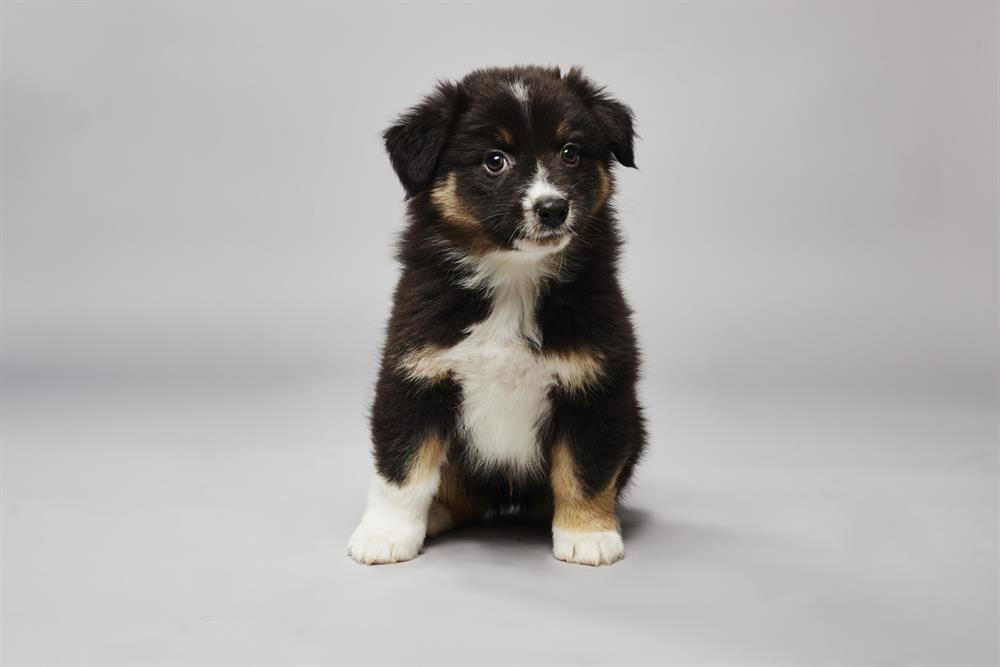
Yes, experience helps. Someone who has already lived with several dogs recognises certain situations faster, panics less about normal developmental stages and more often knows when it is time to ask for help.
But the sheer number of dogs someone has had does not in itself make them a good owner. Sometimes a first-time owner listens, watches, learns and adapts to their particular dog far faster. And sometimes a person who has had dogs all their life is very certain about “how dogs are raised”, because that is how it was done twenty years ago with a dog of an entirely different breed and temperament.
So a first dog is not an automatic “no” for us. Curiosity, the ability to learn and the wish to see the dog who is actually in front of you matter far more.
Most people are not looking for a sports project
As many as 113 of the 117 people wrote that they wanted a family member. 90 also see an Aussie as a partner for active leisure, while only 13 marked an ambition for sporting titles.
And that reflects very well how a large share of Aussies live today.
Yes, this is a working, active and highly capable breed. With an Aussie you can do agility, obedience, rally, frisbee, herding and probably ten more activities whose names we do not even know today. But most people above all need a dog they can live with.
A dog who on Saturday will go to the woods, on Sunday perhaps take part in a training session, on Monday be beside you while you work from home, and on Tuesday will have to accept that today life is simply duller.
“Family member” sounds very cosy, but it also means his needs exist even when they are inconvenient. A dog does not switch off when the family is busy. He has his own temperament, sensitivities, life stages and sometimes very definite opinions about the world.
So what matters to us is not only what someone wants to do with a dog, but also whether they are ready to live with a dog.
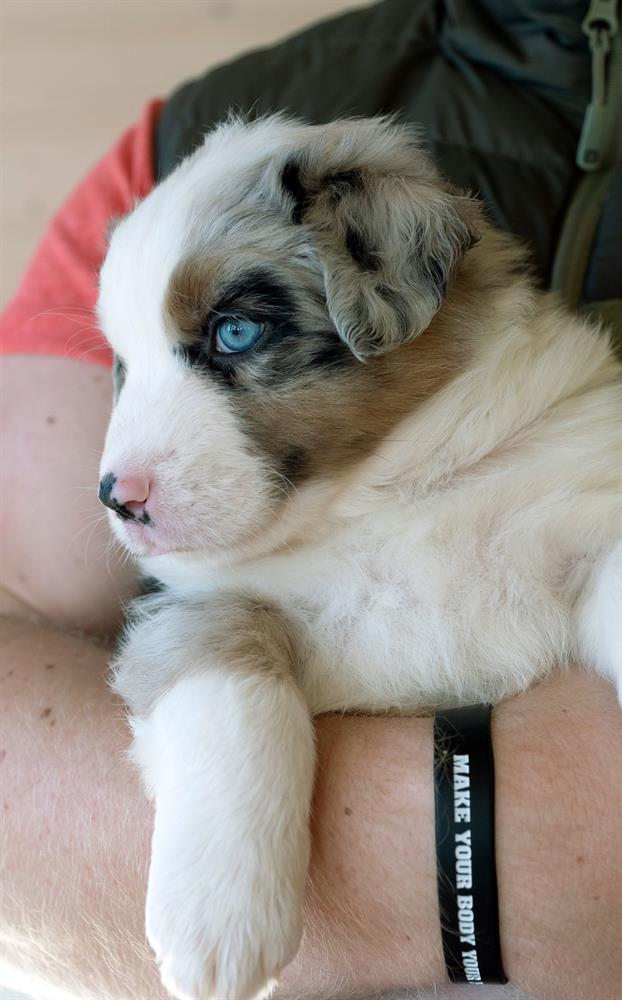
Everyone knows the Aussie as active. And here the next problem begins
92 per cent of respondents described their life as at least moderately active. People walk, cycle, run, camp and hike.
And most answer the question about an Aussie’s needs rather well. 89 people mentioned mental work, 87 time with their person, 86 physical exercise. But only 27 separately mentioned ongoing training.
Even more rarely does anyone spontaneously mention something we find no less important — the ability to do nothing.
An Australian Shepherd needs activity. That is no revelation. But it is very easy to make the opposite mistake and start believing that a good owner is one who keeps their dog occupied constantly. A long walk. The ball. A training session. A scent game. A bit more ball. Perhaps some tricks in the evening, because a clever dog must be stimulated all the time.
And then we accidentally raise a very athletic dog who is excellent at doing things and hopeless at stopping.
So when 65 people in our questionnaire write that they can give a dog 3–5 hours a day, we do not automatically think: “Excellent, five hours — the ideal owner.” Three hours can be very meaningful time together. And those same three hours can be such a marathon of activities that afterwards neither person nor dog wants to see the other.
Sustainability matters far more to us. Can this life be kept up for a year, not just for the first three weeks after the puppy comes home?
And what if we live in a flat?
105 of the 117 people live in a city or a suburb. Only 12 named a rural area or a homestead.
This means that a real twenty-first-century Aussie fairly often does not wake up next to sheep. He wakes up in a Vilnius flat. Takes the lift. Walks past a trolleybus. Waits at a crossing. Learns to ignore the neighbour’s dog and sleeps in the living room in the evening.
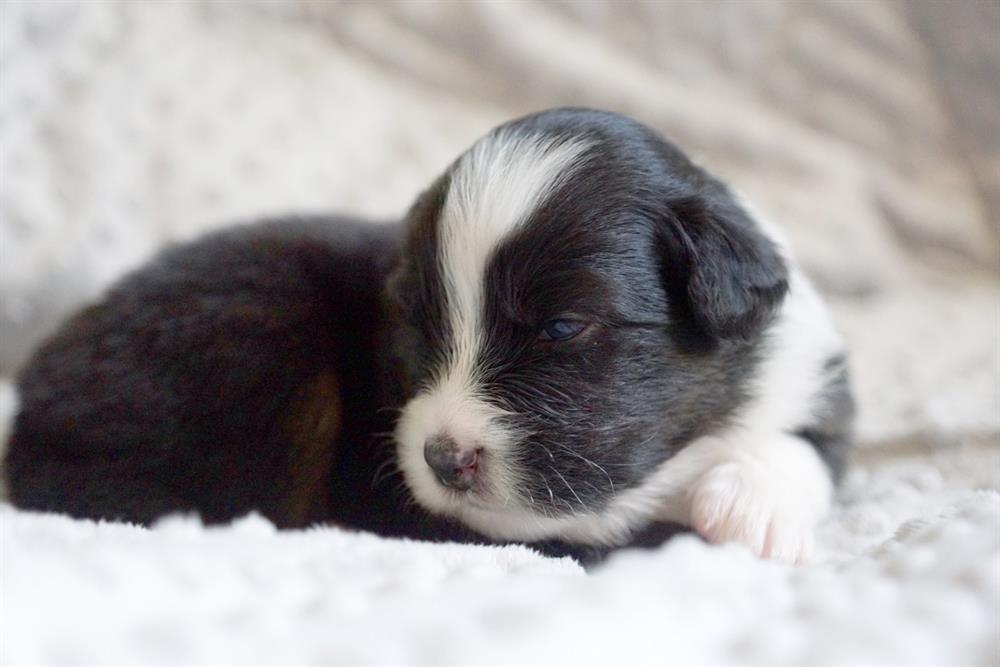
And that is perfectly fine.
A large garden is a convenience, but it is not a certificate of a dog’s quality of life. A dog can be bored on half a hectare too — he will simply have more room in which to be bored. Equally, a flat is not in itself an obstacle if the family understands the dog’s needs and creates a meaningful life for him beyond those four walls.
So we are far more interested not in how many square metres a person has, but in what happens inside and beyond them.
And then comes colour
Let us be completely honest here. Australian Shepherds are very beautiful dogs.
Only 44 of the 117 people said they had no colour preference at all. The rest had at least some picture in mind. Some like blue merle, others red tri, and some dream of blue eyes.
On sex, 41 people preferred a male, 33 a female, 23 said it did not matter, and another 20 admitted quite reasonably: we simply do not know what the real difference is.
Wanting a certain look is no crime. The problem starts only when looks become more important than the dog you will have to live with.
Five years on you will feel far less the colour of the coat than his energy, his sensitivity, his relationship with people, his ability to settle, his response to new situations and how well the two of you understand each other.
So our job is not to tell someone: “You are not allowed to like blue merle.” You are. We would simply like about thirty more important things to be added alongside the colour.
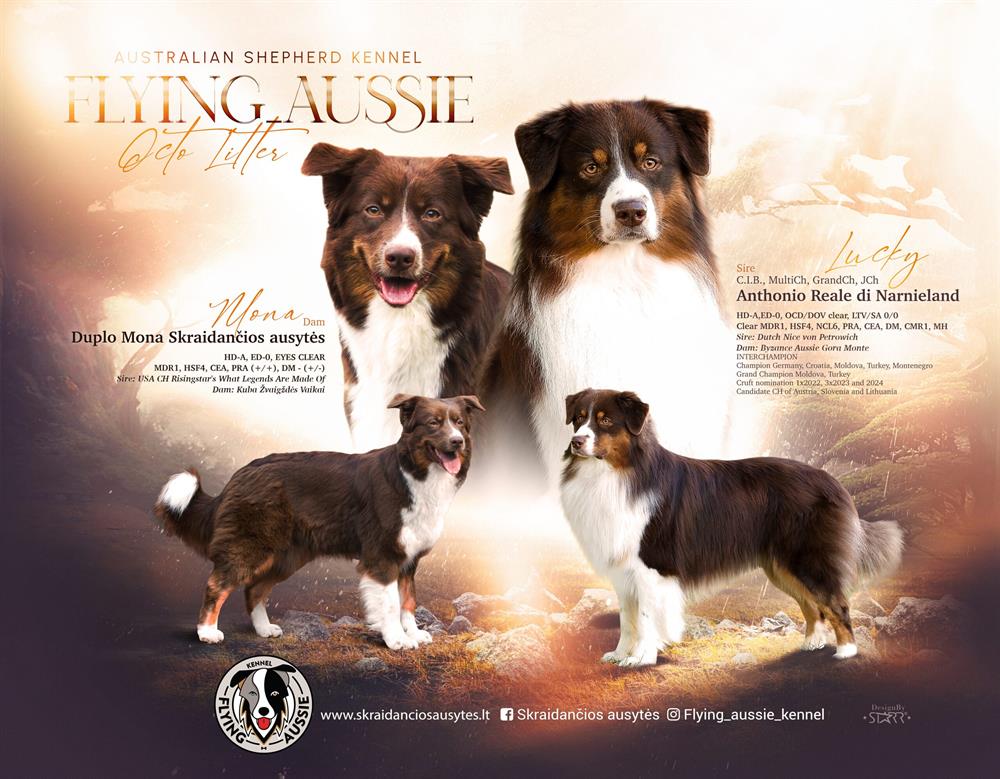
So what kind of person is “the right one”?
After 117 questionnaires we still have no formula. And that is probably good.
But one thing recurs very clearly: what gives us far more confidence is not a perfect person, but one who sees their own life realistically. Someone who describes how they live now, rather than what an athlete they will become once they have a dog. Who understands that a dog needs both activity and sleep. Who, even if it is a child who badly wants the dog, knows the responsibility will still be an adult’s. Who thinks about work, illness, travel and support. Who can say “I don’t know that”.
And who is ready to ask for help before a small problem becomes a very large one.
Incidentally, this is where our results are most heartening: 111 people named the breeder as an important source of information, 96 would trust a chosen trainer, and 99 plan to attend classes.
To us that matters far more than a perfectly filled-in form.
Because the questionnaire is not an entrance exam to an Australian Shepherd university. Sometimes it really does help us find a very suitable puppy. Sometimes we realise it is better to wait for the next litter. And sometimes the conversation reveals that another breed would suit the person better altogether.
All three answers can be good ones.
So when filling in our questionnaire there is no need to guess what the breeder wants to hear. It is far more useful for us to hear the truth.
Because an Australian Shepherd does not need the person with the biggest garden, the longest list of hikes or the most beautifully written answer. He needs a person he will enjoy living with both in the woods on Saturday and at home on a completely ordinary Wednesday.